Showing posts with label leaders. Show all posts

Tuesday, April 19, 2016

Are You Building Leaders for Tomorrow?


The outlook for future leadership certainly seems bleak, judging from the current landscape managers describe nationwide:
  • The 2015 Business and Human Capital Challenges report from the Society of Human Resource Management found that one of the top concerns among HR and business leaders was the development of the next generation of leaders.
  • Workplace Trends’ Global Workforce Leadership survey in February and March said that leadership is the hardest skill to find in employees.
  • A 2015 Gallup study of 2.5 million manager-led teams found that a mere 18 percent of current managers said their companies had the talent required for leadership.
  • Not surprisingly, among the 1,000 employees surveyed by Workplace Trends, only 36 percent said leadership was a strength in their organization.
With the demand for leadership development on the rise, companies are scrambling for solutions that are effective and quick and require a minimal investment of time and money. Fortunately, there is good news.
That news? Leaders are made, not born. While no one is created with leadership in his or her bones, many people in business are ambitious, strong communicators from the start. So, it’s up to employers to determine who shows the motivation and tendency toward leadership -- and then develop it.
But how does an organization find these diamonds in the rough? The answer is, observe how employees communicate, and identify those who seem to be the most motivational team members These young leaders are usually hiding in plain sight. They solve problems creatively, take charge and plan strategies well, and are the people others go to when they have questions or need guidance.
Once these "A" players are found, organizations should cultivate their leadership skills and "grow them" within the company using the following simple techniques:

1. Use technology to educate.

Fires don’t start with roaring flames -- they need kindling, logs, access to air and, finally, a spark. Those who want to learn leadership skills will do so, given the right opportunity andtools. Give them their spark.
Many employers worry about the cost of professional development, which is understandable. Why would they invest time and money into employees who may leave at the drop of a hat? Good news: There are many free online resources employers can offer to their staff to develop their leadership skills. Examples include Coursera, Alison.com, Open Learn, andMindtools.com. MIT even offers an online version of Organizational Leadership and Change, a graduate level university course.
Other resources vary in cost, but may be worth a look. For example, career counselors help employees gain confidence and feel more inspired. They typically use processes and build action plans geared toward goal achievement.
Webinars are also great tools. Professional organizations like the American Management Association offer webinars that are interactive and offer step-by-step guides to learning new skills.

2. Encourage networking and engagement.

Great leaders keep their fingers on the pulse of the industry. A great method for keeping informed is regularly networking and engaging with colleagues.
Teach employees to create professional relationships and confidently initiate conversations. Expanding their networks builds crucial leadership skills like communication and makes them strong representatives for the company.
Refer them to tools like Let’s Lunch, so they can easily coordinate and meet with experts in their field who can help them achieve career success.
In addition to outside experts, focus on internal mentors. The 2016 Deloitte Millennial Survey found that 94 percent of 7,700 respondents surveyed said their mentors' advice was good, and 91 percent said their mentors showed a good level of interest in the their development. When managers can create a relationship with employees that makes the former feel less like a boss and more like a guide or a coach, they can have a great influence on employees.
Establish this dynamic to earn trust and respect. Employees are more apt to listen to and engage with leaders who develop a strong sense of camaraderie on the team. When those employees see an investment of time and energy from their employer, they will reciprocate and show an eagerness to grow in the company.

3. Suggest personal development techniques.

Personal development is a major part of any great leader’s life. Encourage employees to explore techniques in their personal lives to improve their awareness, develop their talents and build human capital while enhancing their quality of life.
There are various tools companies can use -- like exercise.  An April 2015 study from Leeds Metropolitan University found an increase in productivity and satisfaction and improved time management skills when employees exercised during business hours. Encourage exercise regimens and offer flexibility during business hours to provide employees with gym time.
Mindfulness practices are another tool. Yoga, tai chi and meditation are all great for building a sense of "present moment" awareness that helps with decision-making and productivity. There are several free and low cost online resources that can teach meditation, such as Headspace, Calm,Sattva and Buddhify.

These lifestyle choices can increase knowledge and effectively reduce stress and improve productivity. A less-stressed, more productive employee is more apt to learn and develop his or her leadership skills.
Heather R Huhman

Tuesday, April 12, 2016

10 Inspirational Quotes From Women Business Leaders


By 2020, Alexander Hamilton’s solemn mug will be replaced on the $10 bill with the face of, yes, a woman. Will it be a woman from the world of business? There’s no word yet on who it will be but we’re sure she will be awesome.
Regardless of whose face ends up on the bill, enjoy 10 of the most inspirational quotes from women who not only played the leadership game -- they reinvented it.

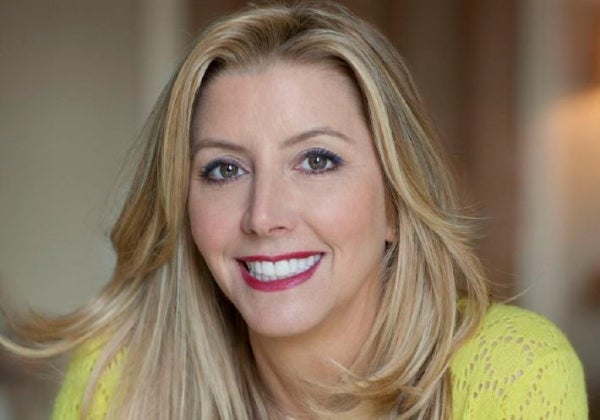
Sara Blakely, founder of Spanx

“Don’t be intimidated by what you don’t know. That can be your greatest strength and ensure that you do things differently from everyone else.”
Listen to one of America’s richest self-made woman, Sara Blakely, who at the age of 44, sits on a fortune of approximately $1 billion thanks to the success of her popular undergarments. Her Spanx line has expanded to jeans and yoga wear, and -- to date -- her company remains privately owned.

Sheryl Sandberg, COO of Facebook

Image credit: Drew Altizer | Flickr
“Option A is not available. So let’s kick the sh** out of option B."
Facebook COO Sheryl Sandberg continues to inspire with her frank words of courage following her husband, David Goldberg’s, death. In a tribute post to her husband on Facebook last month, Sandberg wrote about her struggle with acceptance and related a situation where she had to step in for a father-child activity. “I want Dave,” she wrote. “I want option A.” However, she wrote of her resolve to honor his memory and kick the sh** out of option B.”   

Lori Greiner, inventor, QVC host and ‘Shark Tank’ investor

Image credit: lorigreiner.com
"Dear optimist, pessimist, and realist -- while you guys were busy arguing about the glass of wine, I drank it! Sincerely, the opportunist!"
The “Queen of QVC,” Lori Greiner, who joined the ABC show Shark Tank in 2012 alongside Barbara Corcoran. Greiner has hosted a QVC show calledThe Clever & Unique Creations Show since 1998 and hawks her popular products, such as jewelry organizers, on the channel. She also runs a product development and marketing company in Chicago.

Mellody Hobson, of Ariel Investments

Image credit: Joi Ito | Flickr
“If we can learn to deal with our discomfort and just relax into it we'll have a better life.”
As a standout African-American female leader in the finance sector, Mellody Hobson, president of Ariel Investments and chairwoman on several boards, including Disney Animation, can speak from experience about being accustomed to discomfort. Hobson also is a vocal advocate for diversity, saying, “Invite people into your life that don’t look or think like you.”

Mary Kay Ash, founder of Mary Kay Cosmetics

Image credit: marykay.com
“Aerodynamically the bumblebee shouldn’t be able to fly, but the bumblebee doesn’t know that so it goes on flying anyway.”
Mary Kay Ash founded Mary Kay Cosmetics in 1963. Her entrepreneurial talents emerged long before, when she joined the direct sales force of Stanley Home products in the 1930s as a side gig, which became her full-time job in 1939 -- after her husband ran off and left her to support three children. Success in spite of tragedies, including her second husband’s death shortly before her first cosmetics store was poised to open, set a high bar of grit and fortitude.

Barbara Corcoran, real estate magnate and ‘Shark Tank’ investor

Image credit: LinkedIn Pulse | Flickr
"The difference between successful people and others is how long they spend time feeling sorry for themselves."
Barbara Corcoran, who got straight Ds in high school and college, founded one of New York City’s premiere real-estate firms, The Corcoran Group, in 1973 for $1,000 in seed money. She turned it into an empire and sold it for $60 million. In 2009, she joined the cast of ABC’s Shark Tank, and later co-founded Barbara Corcoran Venture Partners, an angel investment company.

Eileen Fisher, fashion designer

Image credit: Matt Dunham | Flickr
“Life-fulfilling work is never about the money -- when you feel true passion for something, you instinctively find ways to nurture it.”
Eileen Fisher founded her line of eco-friendly, organic women’s loungewear in 1984 and currently employs more than 1,100 employees with over 60 stores across the U.S. She’s described her business as “an obsession” -- one of her son’s first phrases was “crinkle rayon.” While her obsession is flourishing, Fisher said her divorce and the terrorist attacks of September 11, 2001, gave her perspective to make sure her most important relationships remain at the forefront -- including taking care of herself.

Melinda Gates, co-founder of the Bill & Melinda Gates Foundation

“If you are successful, it is because somewhere, sometime, someone gave you a life or an idea that started you in the right direction. Remember also that you are indebted to life until you help some less fortunate person, just as you were helped.”
Melinda Gates -- also known as the wife of the richest man in the world, Bill Gates -- is formidable in her own right. Before marrying Gates, she was a general manager of information products at Microsoft. Since quitting her job there in 1996, she’s been both a powerful figurehead and hands on in the Gates Foundation mission to fund projects that will impact global health.

Andrea Jung, former CEO of AVON and president of Grameen America

“My parents ingrained in me early on that the perfect score is always something to strive for. I want to win and I want to succeed no matter what.”
The former CEO of AVON who resigned from her post in 2012 following the company’s poor financial performance and investor furor, Andrea Jung now runs Grameen America, a microfinance organization, which was created by Nobel Peace Prize-winning microlender Muhammad Yunus -- the nonprofit lends microloans to America’s poor. And yes, some of those micro-borrowers are probably Avon sales people.

Arianna Huffington, editor-in-chief of the Huffington Post

“We need to accept that we won’t always make the right decisions, that we’ll screw up royally sometimes -- understanding that failure is not the opposite of success, it’s part of success.”
Arianna Huffington, who recently signed on to remain editor-in-chief ofAOL/Huffington Post until 2019, shared her #fails with graduates at Sarah Lawrence College in 2011: her failed epic romance with the late-London Times columnist Bernard Levin and her original plans for The Huffington Post to be a highbrow literary site that nobody was going to read, “but everyone was going to pretend to have read it.” Turns out, she did all right.  
Carolyn Sun

Wednesday, January 27, 2016

Real Leaders Own Their Mistakes


Whether you’re a CEO, a manager, or a business owner, you’re the boss, and that means you’ve got a lot of responsibility riding on your shoulders. When you’re in position of authority, your customers, investors, and employees put a great deal of faith in your ability to make the right call. So you have to step up to the plate and deliver.
But sometimes, things go terribly wrong. And while it might be tempting to fall back on some lame excuse or blame someone else, that’s a big red flag that you’re not ready for prime time. If you want to make the big bucks, you’ve got to put on your big-boy pants and hold yourself accountable. Whining and pointing fingers won’t cut it.
Unfortunately, when it comes to the need for business leaders to own their mistakes, far too many bosses act as if they never got the memo.
For example, I’ve heard former Hewlett-Packard CEO Meg Whitman(she’s currently CEO of Hewlett Packard Enterprise and Chairman of HP Inc.) make plenty of thinly veiled excuses for four long years of write-downs, layoffs, and revenue declines before finally giving in to shareholder pressure and splitting the company in two.
Whitman blamed former CEO Leo Apotheker and his botched acquisition of Autonomy. Never mind that, as a board director, she approved every decision he made. She also blamed his predecessor, Mark Hurd (now co-CEO of Oracle) for his acquisition of EDS and R&D cuts.
And when Apotheker was running the show, I remember a couple of earnings calls where he lowered the company's revenue targets after having just raised them. Instead of holding himself accountable for lousy forecasts, he blamed everyone and everything from Hurd and the breakout success of Apple’s iPad to the earthquake and tsunami in Japan.    
In contrast, Hurd never pointed a finger at his predecessor, Carly Fiorina. He simply took the reins, did what had to be done, turned the company around, and led HP to market share gains across all core businesses and five straight years of profit and revenue growth, even though half his tenure coincided with the Great Recession. 
This lack of accountability epidemic is even worse in Washington. Whenever a politician opens his mouth you can expect blame to spew out. Speaking at a fundraiser in Atlanta a couple of years into his first term as President, Barack Obama blamed the sub-prime mortgage crisisand ensuing recession squarely on the Bush Administration:
“We got here after 10 years of an economic agenda in Washington that was pretty straightforward. You cut taxes for millionaires, you cut rules for special interests, and you cut working folks loose to fend for themselves. That was the philosophy of the last administration and their friends in Congress.”
That wasn’t the first time and it certainly wouldn’t be the last that Obama blamed America’s economic woes and chaos in the Middle Easton his predecessor, Republicans in Congress, anyone but himself. Frankly, it’s obscene for a sitting president – the most powerful man in the world – to shirk his responsibility and play a childish blame game.
Bush certainly had his issues, but blaming others for his failures was not one of them.
Not only can Obama, Apotheker, and Whitman learn about leadership accountability from Bush and Hurd, they can also learn about owning their mistakes from the National Football League.
Green Bay Packers head coach Mike McCarthy was recently taken to task for his decision to kick an extra point and send the Arizona Cardinals game into overtime (a fifty-fifty bet), instead of going for a two-point conversion, which the team had done successfully two thirds of the time this season. But like a true leader, McCarthy owned the decision and held only himself accountable.
A couple of weeks before, New York Giants head coach Tom Coughlinmade the rare decision to resign after three losing seasons, instead of putting the team’s management, players, and fans through the drama over whether he’d be fired or not. He left with integrity … and his head held high.
And sophomore wide receiver Odell Beckham Jr. posted an unconditional apology for his unsportsmanlike behavior against cornerback Josh Norman during a Carolina Panthers game. He could have blamed it on taunting by Norman and some pregame antics, but instead, he held only himself accountable.    
This is simple, folks. Everyone makes mistakes, but real leaders own them. Real leaders hold themselves, and only themselves, accountable. The buck really does stop with them. That’s the way it should be. That’s the only way to lead.
Steve Tobak

Tuesday, January 5, 2016

30 Under 30 2016: Today's Brightest Young Stars And The Future Leaders Of Everything


1222_forbes-cover-011816-30-under-30-gate_1200x538

From an initial screening list of more than 15,000 of the best of the best, the 600 women and men featured in the Forbes fifth annual 30 Under 30 are America’s most important young entrepreneurs, creative leaders and brightest stars. Name a business sector, social issue or essential institution, they are taking it on and changing the rules of the game– or creating entirely new playbooks.
In the past, youth was a handicap to professional success. Getting older meant more resources, more knowledge, more money. No more. Those who grew up in the tech age have way bigger ambitions — perfectly suited to the dynamic, entrepreneurial and impatient digital world they grew up in. If you want to change the world, being under 30is now an advantage.

Some names on this year’s list you already know: NBA champ Stephen Curry, Star Wars: The Force Awakens leading man John Boyega, plus-sized supermodel Ashley Graham, Canadian crooner Shawn Mendes and YouTube gamer CaptainSparklez (Jordan Maron). Others are superstars in their own realms. Clara Sieg is Revolution Ventures youngest and only female partner. Timothy Hwang, cofounder of FiscalNote, takes a “Moneyball” approach to forecasting pending legislation, and Spire Global’s Jeroen Cappaert sends nano-satellites into space to listen to the world’s oceans in order to track shipping, weather — and pirates. 
After five years, our record for picking tomorrow’s superstars can be judged by the 2016 cover. It’s a portfolio of influential past alumni, including Datto founder Austin McChord, who last year backed his way up to a unicorn valuation (and revealed that his company was providing data protection to portions of Hillary Clinton’s private email server), and Michelle Phan, who raised $100 million in September for ipsy, her 1.5 million subscriber-strong beauty business. Two years after the Collison brothers, John and Patrick, made the U30 list, they’re now on top of a $5 billion mobile payment juggernaut, and Alex Morgan won the 2015 FIFA Women’s World Cup as forward for U.S. Women’s National Team.

The process to make the list is intense. We look at thousands of candidates from 20 different categories and consider their game-changing quotient along various dimensions, such as impact, use of cutting edge technology or creativity, scalability or adaptability, number of people reached and dollars raised/generated. There are no repeats from years past. 
Recommended by Forbes
An army of Forbes reporters is assigned to each category to field nominations from social media and our online nomination form (check out 30-under-30-nominations) as well as personal contacts and gumshoe work. They research candidates and vet the finalists with a panel of expert judges in the field — among them billionaires Steve Balmer, Tory Burch, Robert Smith and Laurene Powell Jobs; personalities Sarah Jessica Parker, Jessica Alba and Carmelo Anthony; founders Chris Sacca and Wendy Kopp; and 2015 MacArthur Grant winner Ta-Nehisi Coates. This year we also included a dozen past Under30s as judges, including Global Citizen’s Hugh Evans and Tracy Britt, Warren Buffett’s protege.

The Class of 2016 By The Numbers*:
15,000+: Nominations
600: Winners
64%: Want to ‘Change the world’
50%: Define success as ‘Liking myself and what I do’
5 top cities of residence (in order): New York City, San Francisco, Los Angeles, Boston, Chicago
3 most popular undergrad schools (in order): Stanford, U. Penn, Cornell
69%: Earned college degrees
50%: Have zero college debt
63%: Identify as growing up middle class
36%: Immigrants or first-generation Americans
84%: Single
No. 1 and 2 dream mentors: Elon Musk and Sheryl Sandberg
No. 1 can’t-live-without gadget: iPhone