Showing posts with label money. Show all posts

Tuesday, April 12, 2016

10 Inspirational Quotes From Women Business Leaders


By 2020, Alexander Hamilton’s solemn mug will be replaced on the $10 bill with the face of, yes, a woman. Will it be a woman from the world of business? There’s no word yet on who it will be but we’re sure she will be awesome.
Regardless of whose face ends up on the bill, enjoy 10 of the most inspirational quotes from women who not only played the leadership game -- they reinvented it.

Sara Blakely, founder of Spanx
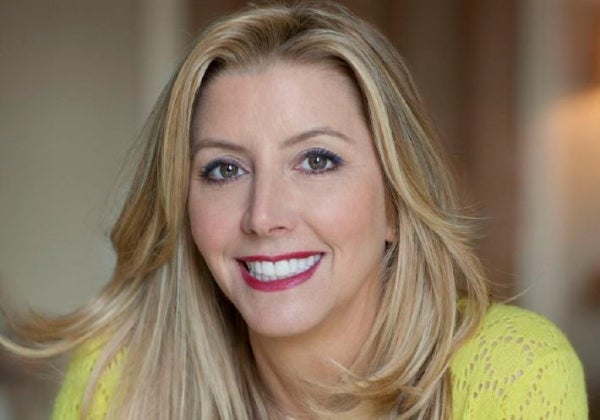
“Don’t be intimidated by what you don’t know. That can be your greatest strength and ensure that you do things differently from everyone else.”
Listen to one of America’s richest self-made woman, Sara Blakely, who at the age of 44, sits on a fortune of approximately $1 billion thanks to the success of her popular undergarments. Her Spanx line has expanded to jeans and yoga wear, and -- to date -- her company remains privately owned.

Sheryl Sandberg, COO of Facebook

Image credit: Drew Altizer | Flickr
“Option A is not available. So let’s kick the sh** out of option B."
Facebook COO Sheryl Sandberg continues to inspire with her frank words of courage following her husband, David Goldberg’s, death. In a tribute post to her husband on Facebook last month, Sandberg wrote about her struggle with acceptance and related a situation where she had to step in for a father-child activity. “I want Dave,” she wrote. “I want option A.” However, she wrote of her resolve to honor his memory and kick the sh** out of option B.”   

Lori Greiner, inventor, QVC host and ‘Shark Tank’ investor

Image credit: lorigreiner.com
"Dear optimist, pessimist, and realist -- while you guys were busy arguing about the glass of wine, I drank it! Sincerely, the opportunist!"
The “Queen of QVC,” Lori Greiner, who joined the ABC show Shark Tank in 2012 alongside Barbara Corcoran. Greiner has hosted a QVC show calledThe Clever & Unique Creations Show since 1998 and hawks her popular products, such as jewelry organizers, on the channel. She also runs a product development and marketing company in Chicago.

Mellody Hobson, of Ariel Investments

Image credit: Joi Ito | Flickr
“If we can learn to deal with our discomfort and just relax into it we'll have a better life.”
As a standout African-American female leader in the finance sector, Mellody Hobson, president of Ariel Investments and chairwoman on several boards, including Disney Animation, can speak from experience about being accustomed to discomfort. Hobson also is a vocal advocate for diversity, saying, “Invite people into your life that don’t look or think like you.”

Mary Kay Ash, founder of Mary Kay Cosmetics

Image credit: marykay.com
“Aerodynamically the bumblebee shouldn’t be able to fly, but the bumblebee doesn’t know that so it goes on flying anyway.”
Mary Kay Ash founded Mary Kay Cosmetics in 1963. Her entrepreneurial talents emerged long before, when she joined the direct sales force of Stanley Home products in the 1930s as a side gig, which became her full-time job in 1939 -- after her husband ran off and left her to support three children. Success in spite of tragedies, including her second husband’s death shortly before her first cosmetics store was poised to open, set a high bar of grit and fortitude.

Barbara Corcoran, real estate magnate and ‘Shark Tank’ investor

Image credit: LinkedIn Pulse | Flickr
"The difference between successful people and others is how long they spend time feeling sorry for themselves."
Barbara Corcoran, who got straight Ds in high school and college, founded one of New York City’s premiere real-estate firms, The Corcoran Group, in 1973 for $1,000 in seed money. She turned it into an empire and sold it for $60 million. In 2009, she joined the cast of ABC’s Shark Tank, and later co-founded Barbara Corcoran Venture Partners, an angel investment company.

Eileen Fisher, fashion designer

Image credit: Matt Dunham | Flickr
“Life-fulfilling work is never about the money -- when you feel true passion for something, you instinctively find ways to nurture it.”
Eileen Fisher founded her line of eco-friendly, organic women’s loungewear in 1984 and currently employs more than 1,100 employees with over 60 stores across the U.S. She’s described her business as “an obsession” -- one of her son’s first phrases was “crinkle rayon.” While her obsession is flourishing, Fisher said her divorce and the terrorist attacks of September 11, 2001, gave her perspective to make sure her most important relationships remain at the forefront -- including taking care of herself.

Melinda Gates, co-founder of the Bill & Melinda Gates Foundation

“If you are successful, it is because somewhere, sometime, someone gave you a life or an idea that started you in the right direction. Remember also that you are indebted to life until you help some less fortunate person, just as you were helped.”
Melinda Gates -- also known as the wife of the richest man in the world, Bill Gates -- is formidable in her own right. Before marrying Gates, she was a general manager of information products at Microsoft. Since quitting her job there in 1996, she’s been both a powerful figurehead and hands on in the Gates Foundation mission to fund projects that will impact global health.

Andrea Jung, former CEO of AVON and president of Grameen America

“My parents ingrained in me early on that the perfect score is always something to strive for. I want to win and I want to succeed no matter what.”
The former CEO of AVON who resigned from her post in 2012 following the company’s poor financial performance and investor furor, Andrea Jung now runs Grameen America, a microfinance organization, which was created by Nobel Peace Prize-winning microlender Muhammad Yunus -- the nonprofit lends microloans to America’s poor. And yes, some of those micro-borrowers are probably Avon sales people.

Arianna Huffington, editor-in-chief of the Huffington Post

“We need to accept that we won’t always make the right decisions, that we’ll screw up royally sometimes -- understanding that failure is not the opposite of success, it’s part of success.”
Arianna Huffington, who recently signed on to remain editor-in-chief ofAOL/Huffington Post until 2019, shared her #fails with graduates at Sarah Lawrence College in 2011: her failed epic romance with the late-London Times columnist Bernard Levin and her original plans for The Huffington Post to be a highbrow literary site that nobody was going to read, “but everyone was going to pretend to have read it.” Turns out, she did all right.  
Carolyn Sun

Tuesday, October 20, 2015

4 ‘Normal’ Financial Habits That Are Actually Making You Lose Money


Recent surveys have shown almost half of all Americans aren’t saving enough money to sustain them long-term.
That’s not difficult to believe if you’ve ever looked at your bank account balance at the end of the month, and wondered where all your money went.
It sometimes feels as if there’s a leak in your bank account, and no matter how diligent you are with budgeting, expenses crop up and seem to siphon your extra cash.
Many of us want to save more.
We have financial goals we’d like to reach.
But between paying the bills, putting food on the table and putting money away for retirement, we can’t seem to find extra wiggle room in the budget for savings.
But the truth is, most of us have a few bad money habits we can change, to free up some of that cash we work so hard to earn for savings.
Do you have any of these bad money habits?

1. Inflating your lifestyle

Think back to the last time you got a raise.
What did you do with that money?
Most people use their extra income for what financial experts call “lifestyle inflation.”
Lifestyle inflation happens when, instead of saving the extra money you make, you put it toward something to improve your lifestyle.
This is a bad financial habit that will end up costing you big-time in the long run.
For example, let’s say you received a raise of a dollar an hour each year.
If you work full-time, you work, on average, 2,000 hours per year.
So your annual increase would be $2,000.
If you received a dollar per hour raise every year for five years, you’d earn $4,000 more at the end of the second year, and $6,000 more at the end of the third.
Instead of buying a new vehicle with that money or freeing up room in your budget to visit the spa more often, start saving it.
If you were to invest that money, it would be working even harder for you.
Can you imagine how much money you’d have to pad your savings accounts if you simply saved your extra money each year?

2. Incurring credit card interest

Not only can you use them almost everywhere, but you also get to cash in on some amazing credit card perks.
That is, if you don’t engage in this budget-busting financial habit: incurring credit card interest.
Whether you’re using your credit card as a means of financing a lifestyle you can’t afford, or you simply forget to transfer the money onto your balance every month, letting yourself incur interest on your purchases is a costly mistake.
Credit cards can charge 19 percent interest or more, which means, when you carry a balance on your cards, you’re paying far more for the products you charged your credit card for than you thought you were paying at the counter.
That good deal you got on a pair of jeans or your vacation isn’t such a good deal if you tack on credit card interest.
So start paying your credit card down each month to avoid a nasty interest charge, and to free up some money for savings.

3. Opting for add-ons

Have you ever bought something you didn’t really need because it sounded like a good deal?
This is a bad financial habit most of us have engaged in.
For example, let’s say you needed to renew your cell phone plan.
The sales associate tells you that for $5 more per month, you get unlimited long-distance calling.
Five more dollars per month doesn’t sound like much, especially for unlimited long-distance calling.
So, you shrug your shoulders and upgrade.
Never mind you rarely call long-distance. Never mind Skype works just fine. Never mind you live in the same city as all your family and friends.
You’ve fallen into the add-on trap.
This is a dangerous habit to get into.
Sure, this time, it might only cost a few extra dollars, but those dollars accumulate.
If you saved the money you put toward these add-ons, you’d have a lot more in your savings account.

4. Letting your money wither in your checking account

One of the biggest savings mistakes many people make is relying on their checking account to house their money.
Keeping your funds in a checking account is one step above hiding them under your mattress, but still far from the ideal savings situation.
Checking accounts pay pitiful interest.
Your money should be working for you. The mere existence of it should generate more.
That’s what would happen in an investment account.
Your checking account, on the other hand, pays a pitiful amount of interest (usually less than 0.05 percent).
In addition, the money in your checking account is begging to be spent.
The point of a checking account is to have money easily accessible when you need to spend it.
So, when money is sitting in your checking account, it’s begging to be spent.
If you transferred it into a savings or investment account, it’s easier to forget you even have the money.
Boost your savings by transferring your money into a high-interest savings or investment account, and start making that money work for you.
Most of us have made a couple of these financial mistakes in the past, and unfortunately, they eat into our savings rates.
However, with a few small changes and an effort to be more mindful with your money, you can start spending less and saving more.
Marc Felgar

Friday, October 2, 2015

6 Business Books That Will Revolutionize Your Business and Change Your Life


Books have the power to change lives. We live in a time when books are more affordable and accessible. Yet, fewer entrepreneurs read books, using the excuse of a lack of time. If you can’t find time to read, you as an entrepreneur will not grow, which will have an effect on your business.
If you study any successful entrepreneur, you’ll see one of the keys to their success is that they educate themselves through books. You can get books these days for as little as .99 cents. Many are even free through Amazon’s KDP Select program. There’s no reason not to have a Kindle full of books that can educate you and teach you strategies to grow your business. 
Here are six books that can help you create a business and life you love. This list is a good start. It’s up to you to research books that will help you and your business where you are in your journey. These books are changing lives and helping entrepreneurs grow their business. 

1. Just Blow it Up: Firepower for Living an Unlimited Life.

Dixie Gillaspie is an author, coach, speaker and fire starter. She is also a contributor here at Entrepreneur. Her mission and this book are all about breaking through the barriers that typically hold entrepreneurs back from growth in their business and life. Your mindset is one of the most important parts of your business because what you think affects the action you take. Just Blow it Up helps you identify mindset traps and gives you a practical strategy to beat them. This is the definitive guide to climbing over those mental walls.

2. MONEY Master the Game: 7 Simple Steps to Financial Freedom.

Tony Robbins is a pioneer in the personal development space, but his book on finances is like a graduate course in college. A novice in finance could read this book and walk away an expert. Tony takes complicated financial strategies and distills them down to the average reader’s level.
Money is not everything in life, but it is important, especially in the business. There are many entrepreneurs who are great at making income, but are clueless as to how to make their money work for them through investing. You started your business to create freedom, Tony’s book can help you take that freedom to a level you didn’t think was possible through the right investment strategies.

3. 48 Days to the Work You Love.

If you are a frequent Entrepreneur reader, Dan Miller’s book will speak to you, especially if you’re stuck in a day job. What comes through the most in this book is how unique and genuinely an entrepreneur is Dan Miller. Dan is an entrepreneur who refuses to accept what society and the media have conditioned us to believe about our dreams and entrepreneurship. He lays out an actionable plan to transition out of a day job into a business and life you love. Read the book with caution because you will walk away changed. I read this book in hours. I couldn't out it down. 

4. Business in Blue Jeans.

Susan Baroncini-Moe has written the playbook for creating a business that’s everything you’ve wanted it to be. Susan starts off dealing with the mindset traps and moves to the strategies that will help your business see explosive growth. She teaches you how to build a business you love on your terms. Entrepreneurship has changed. Today, you can run a multi-million dollar business from anywhere in the world. Susan teaches you how. I read this book on an eight-hour bus ride from London to Paris, I couldn't sleep because the book had me speechless.

5. The Dip.

You know this list wouldn’t be complete without a Seth Godin book. Seth has a way with words and knows how to cut through the fluff. The Dip is a book about knowing when to quit or move on. The book deals with mindset struggles and offers a plan to overcome them. It’s a short read that should be on every entrepreneur's book list.

6. The Fire Path.

Kate Erickson wrote this book about leading podcaster John Lee Dumas. John and Kate have built the Entrepreneur on Fire podcast to a six-figure a month business. The book lays out a practical plan you can use to grow a business using the untapped medium of podcasting. 
Make time every day and week to read an excellent book. Many of the most successful entrepreneurs read a book a week. Knowledge is power and the key to growth. Add these books to your list; they can help you create a business and life you love.
Kimanzi Constable

Tuesday, July 28, 2015

To Grow Your Business, Start Creating Solutions Instead of Just Managing Problems


As humans, we often get distracted with supervising and conserving the extent and intricacies of what we have, but at some point management only gets us so far. Nature, at its core, creates. It creates and does it well and if it were sentient, it'd probably encourage you to do it too.
Whether it is time, money or clients, too many entrepreneurs focus their efforts on protecting and managing what they have rather than creating even more. At one point I have been guilty of this myself. However, over time I realized that this mindset only keeps entrepreneurs and their businesses back from reaching their true potential. In order to grow, one must create.
The act of creation does exactly what it says it will do: create. Before anything can be managed, it has to be created. For example, in the initial years of starting my business, like many entrepreneurs, I was often forced to significantly reduce my prices to secure a sale. I would sacrifice my profits, sometimes just barely break even, just to get a deal done. Other times, I would resist upselling my current customers because I was afraid of scaring them away to my competitors. My mistake was trying to protect my small customer base instead of finding ways to build it. I’ve learned that the only way around such a dilemma is to prospect so much that one, two or even ten lost sales wouldn’t even matter.
Although some may see the importance of creating solutions rather than managing problems, the fear of meeting the risks attached to such an act can keep them back. Thinking about birds migrating because of a shortage of food may help – they run the risk of losing their home while they find a temporary new one. It's a big risk traveling all that distance. They may starve on the way or lose some helpful bird friends in the flock that could have made spotting places to nest a bit easier. Maybe mates even fall victim to natural causes. Either way, migration is a hazardous act and puts a lot on the table. However, similar problems would have arose sooner or later as a result of managing their shortage of food instead of exploring ways to have more.
It's the same view I have on money. I once viewed money as something finite. As soon as my business brought in sales, I would push that revenue aside and watch it with eagle vision. I did not dare touch it. Reinvesting wasn’t my priority. The reason for this was, like many entrepreneurs, I wasn’t confident that I could make another lump sum of money. Grant Cardone said it best, "The only reason to hold on to something is if there is a shortage." I would very much prefer to be in a situation where my business had too much money that I didn’t know where to put it all than to be in a situation where my days were spent figuring out how to cover expenses and invest in expansion with too little money.
In the business world a situation of too many pencils, not enough paperwould prove disastrous or even fatal. Think of wolves: out of a pack of about fifteen wolves there's usually only one or two alphas. The role of the alpha is to lead the packs into hunts and ensure that hunts don't fail while the rest of the pack executes the hunting strategy. The majority of the pack is focused on bringing in food - creating. If every wolf in the pack was an alpha, and focused on protecting the pack they would all die in starvation. This is the mindset entrepreneurs need to have. Manage, protect and conserve, yes. But most importantly create or your business will starve.
Another thing we humans tend to put our energy towards is managing time. I have found that the most successful entrepreneurs focus their efforts on maximizing time by finding ways to turn an hour into two or three extra hours. It's just like a tree that may be taking its time segregating cells and photosynthesizing. While doing that it may be creating new seeds and moving water up its roots. Maximizing time is a way of ensuring continued existence and success in the great game of business. Some ways to do this are by delegating projects that could have been handled by someone else, ceasing activities that don't help your overall goals and even cutting down on sleep time.
This even applies to natural selection: instead of managing a poor evolution, natural selection weeds out the organisms that don't work and creates newer, more efficient ones suitable for the environment and habitat.
Right now, you couldn't be reading this article if you didn't exist; an egg being fertilized is the reason you're here on the web, enjoying this article. Without creation, you couldn't be here wondering what nature has to offer over certain problems and what solutions it can provide with simple creation. If anything, it's like a massive canvas everything is connected to each other by brush stroke after brush stroke. Take a moment to apply the concept of natural selection to whatever it is in life you're struggling with. Even better, take the idea of creating a solution rather than managing a problem.

Warren Cassel , Jr

Wednesday, July 1, 2015

People Who Spend Money On Experiences Instead Of Things Are Much Happier


When it’s payday and that direct deposit hits your account, you tend to swipe your card more in a day than your thumb swipes through Facebook, Instagram and Tinder combined.
The instant gratification that comes along with the hefty price tags on new clothes, trendy sneakers and expensive jewelry is satisfying enough to be considered an actual addiction.
But it’s crucial for us to remember the importance of investing in our life experiences even more so than splurging on the next big thing from our favorite designer; it’s true that money can’t buy you happiness.
In fact, it seems the happiest people in this world have found a way to distance themselves from shopping addictions and unnecessary spending.
Instead, those people put their money toward travel, experience and memories, and it certainly pays off.
If we all start to invest in our futures more than our sneakers, our lives will be more beautiful than anything money could buy.

Life is about memories, not diamonds.

Just think about it: At the end of your life, are you going to be reminiscing about the fact that you had an iPhone 6 Plus while everyone else was still using the 5, or are you going to recall golden memories you shared with the people who shaped who you’ve become?
A study published in the Journal of Positive Psychology shows people who made expensive purchases on products rather than experiential investments often devalued a new item’s worth directly after buying it, according to the Huffington Post.
The researchers from San Francisco State University found people do, in fact, understand life is all about the memories we create, but we get so caught up in trends and demand that we cave and make purchases we’ll inevitably regret.
Before they even made the purchases, study participants said life experiences would be more beneficial than buying the latest and greatest items on their wish lists.
After buying whatever their heart temporarily desired, participants soon realized they would much rather have put that money toward an experience, which would have increased their happiness for a more sustained amount of time.

Focus on what makes you happy, not what makes you famous.

Research from Cornell University shows Millennials are tempted to make many of their purchases from society’s influence, which makes things like diamond watches and gold chains not only super expensive, but appealing and trendy as well.
We are just as much a product of our society as the shiny, expensive gifts and toys we exchange on a daily basis, if not more.
What sets us apart from our ancestors is that we are enveloped in the world of social media, and just about anything we buy is photographed for shameless self-promotion.
Dr. Thomas Gilovich is a psychology professor at Cornell Universitywho has been looking for a link between money and happiness.
He says,
We buy things to make us happy, and we succeed. But only for a while. New things are exciting to us at first, but then we adapt to them.
Gilovich makes a great point here.
I’m not saying you should never reward a couple of hard weeks at work with a new outfit and a night out, but our larger investments should go toward experiences that create lifelong memories rather than an item that will lose its “cool” factor within a few years (if it’s lucky).
Gilovich tells Fast Company,
Our experiences are a bigger part of ourselves than our material goods. You can really like your material stuff. You can even think that part of your identity is connected to those things, but nonetheless they remain separate from you. In contrast, your experiences really are part of you. We are the sum total of our experiences.

Lose the price tag and explore the world around you.

The Next Web reports there are 79 million Millennials in the United States, three million more than the notorious Baby Boomer generation that is responsible for many of the jobs, industries and government programs at our disposal.
But industries are going to have to re-evaluate Gen-Y if they want to target us in their advertising. Most of us are starting to realize the priceless advantages of spending our hard-earned money on things like travel, education and creative activities.
Researchers say companies will need to adapt to this shift in mentality in order to compete and survive in this generation’s new world.
Ultimately, these are longer-term investments in our own individual happiness.
By spending more of our money on things that enhance our life — filling us with golden memories and unforgettable adventures — we aren’t just changing the industries that surround us, we’re shedding some much-needed positivity and light on the world.

Each day we’re convinced to buy things we don’t need, spend money we don’t have and purchase garbage that loses its value within a matter of weeks.
Generation-Y is one of the largest, most influential groups of society, and we have the unique ability to control the fate of our wallets and investments in life.
Why buy the latest phone when you can put that $400 toward a plane ticket to a country you’ve never been before?
People who constantly live with their future goals, investments and happiness at the forefront of their minds tend to live much happier lives than the rest of consumers swamped in products and bullsh*t.
It’s time to stop swiping the cards every time we get paid and start thinking about the memories we could be making with just a little bit of extra savings and a road map.
Chris Roitta

Thursday, June 25, 2015

I'm a self-made millionaire, and here are the 10 best pieces of advice I can give you about money


About six months ago my wife and I decided to turn our North Georgia summer retreat into our full-time residence.
We decided to make a few changes to the property now that we would be living in it year-round.
As I was getting into my car one morning, three of the workers paused from what they were doing and stared me down.
I stopped and asked if everything was ok and one of the men said, "It's not fair. You have this beautiful home and a nice car while we are stuck doing hard labor for just a little more than minimum wage."
I approached the men and we ended up speaking about building wealth for more than an hour. I shared with them that life wasn't always this good, and at one point I was $50,000 in debt and didn't know how I would climb out of it. The men shook my hand and thanked me for sharing my insights.
Fast forward to this morning and I was again about to get into my car. A man driving a truck down the street stops in front of my house and yells, "Mr. Siebold, I took your advice and started my own company. I have five employees working for me and business is booming. My family and I are experiencing freedom like we never thought possible."
He continued, "Please share your words of wisdom with others."
So moved that this man turned his life around, I'm now going to take his advice and share the takeaways from that conversation six months ago:
1. In a free market economy, anyone can make as much money as they want.
2. Your background, highest level of education, or IQ is irrelevant when it comes to earning money.
3. The fastest way to make money is to solve a problem. The bigger the problem you solve, the more money you make.
4. Don't listen to the naysayers who tell you that life is supposed to be a struggle and that you should settle and be grateful for what you have.
5. Expect to make more money. For this one you have to think big. $100,000, $500,000, or why not $1 million?
6. Lose the fear and scarcity mindset and start seeing money for all the good things: freedom, opportunity, possibility, and abundance.
7. Being rich isn't a privilege. Being rich is a right. If you create massive value for others, you have the right to be as rich as you want.
8. Don't wait for your ship to come in. You're not going to be discovered, saved, or made rich by an outside force. If you want a lot of money, build your own ship. No one is coming to the rescue.
9. Stop worrying about running out of money and focus on how to make more. Constantly worrying about money is no way to live. Dream about money, instead.
10. Stop telling yourself that getting rich is outside of your control. The truth is that making money is an inside job.
Just like the man working at my home six months ago who was frustrated over his finances and held a grudge against the rich, you too have the power to change your financial situation around. Maybe you've been living in debt for years or maybe you've just dreamed of having more; it's all possible if you make the decision and really set your mind to it.

Steve Siebold