Wednesday, August 27, 2014

There's Better Ways Of Working

4 Tweaks For a Healthier Team                                       Do Great Things, Have Fun Doing It

Getting stuff done together can be a rocky road. The trouble is, the model we were taught in school is most akin to the way that the military gets things done. As children we are taught that someone else is in charge and knows best, and you have to do what they say or get into trouble, and top-down hierarchy is replicated in most workplaces. Control, believing we’re right, bullying, blaming, selfishness. Otherwise nice people transform at 9am. All of us could do with developing our humility, empathy, kindness, and ability to shut up and listen.
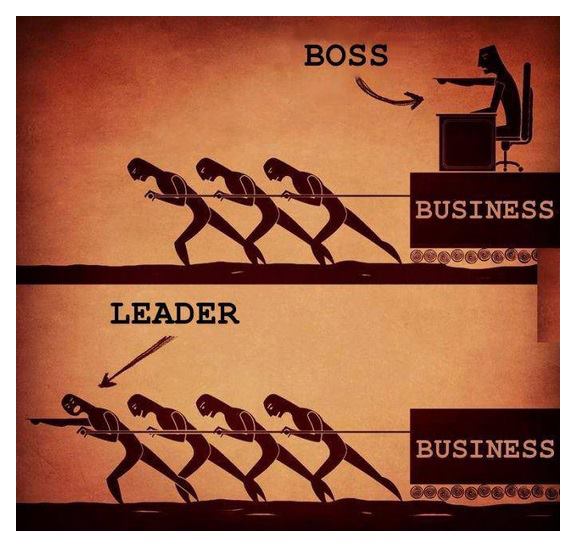
Boss vs LeaderBosses telling us what to do is pervasive, because to some extent it is effective. But it is also problematic. BlessingWhite’s 2011 Employee Engagement Report revealed 69% of people at work worldwide aren’t very engaged with 17% completely disengaged, while Towers Watson’s Health, Wellbeing and Productivity Survey 2012 found 98% of UK employees are impacted by stress. That is an enormous failure to harness more than a fragment of our capability, a colossal waste of potential.

To put it mildly, there’s better ways of working. The good news is that they’re not difficult, even (un)common sense. The difficult part is shifting habits, but the starting point is a desire to enjoy work and a curiosity about learning.
Transitioners are human, and many have experienced the challenges that humans usually experience when they try to get together to get anything done. But at its best Transition takes group health seriously, because it takes the job in hand seriously, albeit lightheartedly. And that means being serious about enjoying the journey, because enjoying what we do is productive.
An aeroplane is on the wrong course 90% of the time. Planes, like bicycles, permaculturists and smart people in smart organisations, use dynamic steering. I don’t mean charming and engaging, but actively responding to a changing environment in order to reach their target, although charming and engaging never go amiss. I find it reassuring that planes get to their destination most of the time, although I’ve personally made a no* flying pact due to Climate Change, so probably less planes flying would be a good thing.
So here’s some simple top tips to transform your work without much effort:
1) Know your destination, celebrate arriving and often.
2) Evaluate briefly at the end of every meeting, and periodically in your team. Appreciate what’s working, ask what could be improved. Correct your course, like steering a bicycle.
3) Take it in turns to speak briefly on a subject, everyone having a chance to say something and be listened to without discussion.
4) Replace blame and complaint with finding ways of enjoying more.

Time is short. Aim high. Have fun. 


By  

Wednesday, August 20, 2014

6 Things Mark Cuban Says You Need to Be Great in Business


There are no shortcuts in business. In order to be successful there are some things that you must know. These are not all of them by a long shot, but in my humble opinion, they are six of the most important:

1. Know how to sell.

Selling means being able to convey why your product or service, which may be you if you are looking for a job,  will make things better. Selling is never about convincing. It is always about helping.

2. Put yourself in the shoes of your customer.

If you know how to put the person you are dealing with in a position to succeed, you can be successful. In order to do this, you must be able to quickly understand the needs and demands of that person and those of the company(s) they work for or with. Every person and industry is different. This is something that comes from investing incredible amounts of time to understand different industries , businesses, roles, and what has made them work and not work.
It is a never-ending process of learning about what companies need. What people in those companies need and how they work. If you don’t understand what it takes to make the people and companies you work with better, you don’t understand how to be successful.

3. Know as much as you can about technology.

The beautiful thing about technology is that it changes every day. Look at any tech you can see today or have ever seen. Any tech you have read about. It was invented by someone. They know the product better than everyone. On the day that it is released, you are as knowledgeable about that  technology as anyone else in the world. From there its just about effort to keep learning.
If you are one of the few people that know the new technologies, you are in a unique position to put yourself in the shoes of your customer(s) and determine if the new technology can be of benefit. New technologies enable change and where there is change there is opportunity.  Its up to you to figure out  what that opportunity is.

4. Always ask how you would design a solution if no current solution existed.

Know this: 99.99 percent of the things we do in business are being done the way they have always been done. No one has re-imagined how things should be done. That is what successful people do. Every situation they are in they take their knowledge of the business or situation they are visiting, whether its buying a deck of playing cards, eating at a restaurant or trying to solve a problem and think about how to re invent it. They don't ask people what they would want. They envision a complete reapplication. Then they decide what to do with what they just recreated.

5. Is it the path of least resistance to something better.

Lots of people come up with ways of doing things that they think are great/amazing. What they fail to ask is whether it will make anyone else’s life better or easier. The simple test of any imagineering of a process or situation is simple. Is this the path of resistance  to a better place for the user? Yes or No.

6. Be nice. 

People hate dealing with people who are jerks. It’s always easier to be nice than to be a jerk. Don’t be a jerk.
Mark Cuban

The ‘Ice Bucket Challenge’ Has Raised More Than $15 Million For A Rare Disease


The so-called “ice bucket challenge” — the Internet sensation that requires people to either dump a bucket of ice water over their head, or donate money to fight ALS, or both — raised $15.6 million for the ALS Association between July 29 and August 18, the nonprofit group announced on Monday. During the same time period last year, the organization raised a much smaller sum of $1.8 million.
“The ALS Association is extremely grateful for the generosity of these donors, and for the actions of several people who initiated and spread this incredible viral effort,” the organization said in a statement on its website.
Everyone from Bill Gates to Oprah Winfrey to LeBron James has posted a video of themselves completing the challenge; even President Obama has been nominated to get in on the action, although he hasn’t yet indicated whether he’ll participate. And celebrities aren’t the only ones. Between June 1 and August 13, people have shared more than 1.2 million “ice bucket” videos on Facebook. The challenge has been mentioned more than 2.2 million times on Twitter since the end of July.
The “ice bucket challenge” didn’t used to be specifically tied to ALS, a rare and fatalneurodegenerative condition that’s commonly known as Lou Gehrig’s Disease. It was initially about either dousing yourself with ice water or donating money to any charity of your choice. But after Chris Kennedy, a golfer in Florida, was nominated to complete the challenge, he decided to raise money for ALS because one of his relatives has it. Soon, ice bucket videos began to circulate among the community of people afflicted with Lou Gehrig’s Disease, posted under the hashtag #StrikeOutALS — and that’s when the campaign really started to take off.
The campaign has inspired thousands of people to give generously to a cause they’ve never supported before. According to the ALS Assocation, 307,598 of the donations it has received in over the past three weeks have come from new donors. But now that so much money has been raised for ALS — a disease that afflicts an estimated 12,000 Americans, according to the CDC, and often kills people within just three years of diagnosis — what exactly will those funds go toward?
“This amount of money… it opens up new opportunities that were previously unfathomable,” Carrie Munk, the spokesperson for the ALS Association, said in a recent interview with Forbes. Because ALS affects relatively few people in the United States, it’s what’s known as an “orphan disease,” which means that developing potential treatments or cures isn’t a high priority for the pharmaceutical industry because they won’t be very profitable. Much of the money will likely go toward that underfunded research, although Munk said the group is still assessing exactly how to best use it.
The challenge isn’t without its controversies. Several critics have argued that the outpouring of support for ALS will dry up philanthropic donations toward other important causes, including medical conditions that impact a greater number of people. Others have argued that the viral nature of the campaign — posting a public video on social media sites — isnarcissistic. After all, you don’t need an ice bucket to decide to donate to charity.

Nonetheless, for better or for worse, this type of “cause marketing” is one of the most popular strategies to boost philanthropy. The most successful cause marketing campaigns are typically driven by big corporations like General Mills, American Express, and Proctor & Gamble. In 2012, the biggest cause marketing drives raised $358 million for charity. Other nonprofits are now considering launching their own versions of the “ice bucket challenge,” but they acknowledge it will probably be hard to replicate.

Wednesday, August 13, 2014

How to Improve as a Manager


Principal Skinner on The Simpsons once asked himself if he had fallen behind the times — wondering why he couldn’t seem to understand his kids. And then, he ultimately concluded that the children were all wrong — that they needed to change.
Chances are, if you’re a manager, you’ve felt this way — like you weren’t on the same page with your direct reports, peers and even your supervisors. You want everyone else to change, but chances are that if issues keep popping up, it might be time to look in the mirror.
If you feel like your career is falling apart, don’t be afraid to turn a critical eye on yourself. You might be underperforming as a manager. Rest assured, however, you are not alone: you can improve as a manager, no matter how long you’ve been at it. After all, you’re always learning, and management roles require patience, practice and dedication. Mistakes are often the best way to learn.
If you find yourself struggling in your leadership position, take a step back and breathe. The following tips can reposition you toward success:

STEP 1: TALK TO YOUR DIRECT REPORTS

Not sure whether the blame lies with you? Talk to your immediate stakeholders: your team. An open, honest conversation can help illuminate your blind spots and improve as a manager.
It’s likely that you already receive a performance review from your own manager, but it’s equally important to maintain a 360 degree view of how your team members perceive you. Ask your direct reports to provide constructive, 1:1 feedback. If privacy and openness are concerns, administer an anonymous survey.


STEP 2: IDENTIFY AREAS FOR IMPROVEMENT

You probably receive constructive feedback on your annual reviews. However, if there is a problem, you shouldn’t wait until then to solve it.
When you realize that something is wrong with what you’re doing, it’s common for emotions to take over. You may feel defensive, helpless or down. Especially if you’re a high achiever, you may even feel like you should give up your role and move on to greener pastures.
Don’t.
You’re human, which means that A) you’re just as vulnerable as anyone else and B) you’re talented enough to self-direct your own course.
Start with three qualities, personal characteristics, or situations that are causing the pain points that you’re experiencing. Attack these, and measure progress and change over time. By focusing on three goals, you will be able to develop a manageable, sustainable process to improve as a manager.


STEP 3: WORK WITH A MENTOR

No matter how badly you think you’re failing, you’re not alone. Others have been where you are before, and you should seek out their guidance. The transition to management is a challenging rite of passage, and the best way to learn is from others who have been just like you — in the very same role.
Reach out to a mentor: someone in a senior role, either within or outside of your organization. In fact, you may want to reach out to multiple mentors. Choose wisely, and don’t be afraid to share what you’re struggling with.


FINAL THOUGHTS: REFLECT

You should always be learning, and that starts with reflection and critical self-assessment. Even the most experienced managers will encounter new challenges and roadblocks. An open mind and positive attitude will help ensure that you’re always on a path to success. At the end of the day, all problems are solvable. Don’t give up. 
Ritika Puri.

Wednesday, August 6, 2014

3 Practical Lessons from Billionaire Mark Cuban

For super entrepreneur Mark Cuban, it all started with a pair of basketball shoes—but not the ones you’re probably thinking of. This particular pair of footwear has nothing to do with the Dallas Mavericks, the NBA team he owns and passionately champions.
Instead, it was this really cool pair the 12-year-old Mark thought he desperately needed. When he asked his father for them, the answer was a definitive no. Mark already had of perfectly fine pair of shoes. “When you have a job, you can get whatever you want,” his dad said.
It was a lesson young Mark took to heart. If you want something, you have to work for it. And work he did. With the help of one of his dad’s friend, Mark began selling garbage bags door to door. He promptly fell in love with business.
“I’ll never forget, they were those thin blue things,” Mark says. “He charged me $3, I sold them for $6. . . Everybody needs garbage bags, so I learned to fill a need and I learned to problem solve.""

Since that long-ago venture, Mark’s never looked back. In 1990, he sold his first company, MicroSolutions, for $6 million. His next undertaking, Broadcast.com was sold to Yahoo for $5.7 billion. In 2000, this maverick acquired the Mavericks, which is currently listed as one of Forbes’ most valuable franchises in sports. Today, he continues to be heavily involved with the team, along with many other business opportunities and ABC’s Shark Tank.
On a recent EntreLeadership Podcast, Dave spoke with Mark about his business smarts. Here are a few takeaways from their amazing conversation.

1. There’s no reason it can’t be you.

After completing college, Mark moved to Dallas, Texas, where he tended bar, sold software, and did whatever it took to learn and get ahead—even down to eating mustard and ketchup sandwiches when times were really lean. But no matter how tough, though, he never gave up. When he felt down and the odds were against them, he just worked harder.
“I say it to Maverick players and I say it to everybody in business,” Mark says. “The one thing in life you can control is your effort. If you are willing to put in the effort to start the business and you are willing to deal with the challenges and the fact you might starve or live like a student . . . If you are willing to fight through those via effort and brain power, anything is possible. There is no reason it can’t be you.”

2. Selling ultimately comes down to connecting and serving.

Through his hard work, Mark learned another valuable lesson. If you can sell, you can accomplish just about anything. And the key to selling is connecting with people while serving them.
“You are not trying to convince them of anything,” he says about potential customers. “You’re trying to show them how you are going to make their lives easier . . . There are no favors involved. It’s a win-win for everybody.”
Success, though, takes more than just a connection with people. There is a lot of hustle involved too, whether it’s garbage bags or multi-billion-dollar tech deals. “Every no gets you closer to a yes,” Mark says. “It’s a numbers game . . . It’s just a question of making the calls.”

3. Don’t be a slave to the bank.

Like Dave, Mark is passionate about staying debt free, especially when it comes to beginning a business. In fact, he says, 99% of today’s companies can be started without capital.
“If you take a loan, you are no longer the boss,” Mark says. “And your customers are no longer the bosses. Your banker is the boss. And if you hit any adversity, like every startup does, the priority becomes taking care of your banker . . . You’re no longer in a position to do whatever it takes to survive.”
For Mark, life is pretty sweet. Besides his many successful companies, his beloved Mavericks and his gig on Shark Tank, he’s recently written a book on what it takes to become a thriving entrepreneur: How to Win at the Sport of Business. In it, he tries to spread his simple message of success that anyone can apply.
It’s like Mark’s father always taught him. Hard work pays rewards. “There are no shortcuts,” he says.  
Dave Ramsey.

Thursday, July 31, 2014

7 Business Apps Every Professional Should Download

Smartphones have given today’s mobile workers the ability to not have to worry about having everything they need before they get moving. Which is great, until they end up in a conference, airplane, or other no-reception zone without the crucial One Thing I Need. Good smartphone and tablet tools don't just provide access – they think ahead and plan for contingencies, like a personal assistant. They’re the tools that can make your job a whole lot easier.
Which apps do this? We happen to have seven of them, linked and ready for installing. The best part: all of them, except one category, are free, and the one that isn’t free is notably less than a hamburger.

1. TRIPIT

TripIt is a personal assistant for travel, especially if you give it access to your email inbox and let it scan for tickets and itineraries. Afterward, you literally don’t have to do anything except open the app to see all the details: your confirmation number, your departure time, the address of your hotel, the distance to the conference center, and the website of the restaurant you’re supposed to eat at Friday night. Open it up at least once before you journey and TripIt will hold your travel details for offline viewing, in case you don’t want to spring for WiFi on the plane. (iPhone/iPadAndroid)

2. QUICKOFFICE

There are all kinds of mobile business apps that claim to work well with Microsoft Office documents, but only so many offer only read-only access. Those that do offer editing tools often want to tie you into their own cloud storage schemes. Not QuickOffice. This app was recently acquired by Google, but it still works as a utilitarian open, edit, and save solution for quick views and adjustments. We’ve talked about the importance of information mobility, and this app provides a great way for mobile workers to access documents on the go. (iTunesAndroid)

3. POCKET (OR INSTAPAPER)

Which app looks and works better is a matter of taste, but both Pocket and Instapaper do their jobs remarkably well. That job: take blog posts, news articles, and other content on the web (including everything at WorkIntelligent.ly – shameless plug), strip it down to just the text and necessary images, and save them to your device for reading when you have time. Big offices used to have such “clipping services” way back when, but they didn’t let you choose your favorite font. (Pocket: iTunesAndroid; Instapaper: iTunesAndroid)

4. AGENDA (OR FANTASTICAL)

It’s odd how unhelpful the default calendar on an iPhone or Android can be. With how much design has gone into the OS of each, how can something as simple as a calendar cause so many headaches? Why can’t you just get an agenda view of everything that’s happening today when you start it up? Why does entering the time and date of an event feel like unlocking a bank vault? My own fix is Agenda Calendar 4, which makes smart guesses about when you want to schedule things, shows your day in a well-designed glance view, and generally gives you more information and links from an event than Calendar. If you frequently use the iPhone’s Reminders function, you might instead try Fantastical 2, which ties directly into the iPhone’s alerts and reminders systems. (Agenda: iTunesAndroid; Fantastical: iTunes)

5. CHROME

Chrome is Google’s own browser. Your iPhone already has the Safari browser, and your Android phone likely has its own default browser. So why would you bother to install a browser that shows the same web pages as either of these? One big reason: if you use Chrome on a desktop computer and sign in on both your desktop and phone with your Google account, you can see and open any tab you had open on your desktop browser when you left it. Or just start typing in a few words from the page you already went to into Chrome’s search bar, and Chrome should come up with it. It feels magical (and maybe a bit creepy). (iTunesAndroid)

6. CLOUDCUBE (ANDROID ONLY)

Maybe you already feel backed up, cloud-connected, and ready to grab your files from anywhere. So cloud-connected, in fact, that you sometimes have a hard time remembering in which cloud you stored that certain file, and where you have room to put that next big one. CloudCube works with all the notable syncing services: Dropbox, Google Drive, SkyDrive, Box, SugarSync, and more. Move files between clouds, see what’s inside each account, and even sync folders between your Android device and your services of choice. (Android)

7. IFTTT (IF THIS THEN THAT) (IPHONE ONLY)

Wouldn’t it be neat if every time you took a screenshot of your iPhone, that screenshot was automatically saved to where you want it? Or if every time you completed a Reminder on your phone, it emailed the appropriate person to let them know, automatically? Or if you could see, on your phone, every photo you’ve been tagged in from Facebook? With IFTTT (short for If This Then That), that kind of two-step, non-thinking action is entirely possible. The hardest part is thinking up the “recipes” that you want for your phone, but after playing with the website a bit, you should get a real sense of just how many things can be done without your having to even think about it. Be sure to install this iPhone app so you can take full advantage of that set-and-forget productivity(iTunes). 

Monday, July 28, 2014

How to Trick Yourself into Becoming a Morning Person

The early bird apparently does get the worm. Christoph Randler, a biology professor at the University of Education in Heidelberg, Germany, found that morning people are often more successful than evening people because, as a group, they tend to be proactive. A recent survey conducted by The Guardian confirms this idea, reporting that many CEOs of successful companies are up by 5 a.m.
But what if you’re more of a night owl than a morning lark – is it possible to change your ways?
Yes, but it will take work, says Dr. W. Christopher Winter, Medical Director for the Martha Jefferson Hospital Sleep Medicine Center in Charlottesville, Va. and spokesperson for the American Academy of Sleep Medicine.
"Your genes determine what we call your 'chronotype,' which is if you are a morning or evening person," says Winter. "It's often similar within families, but it can be influenced to a certain degree."
Changing your chronotype takes about two weeks, but you have to stick with it. If you slack off, you’ll drift back to your natural tendencies, Winter cautions. He offers six simple tips for adjusting your internal clock:
1. Put yourself on a morning schedule, but don't sweat bed time. 
Wake up, exercise and eat at the same time every day, says Winter. The body likes to anticipate what’s happening, and will settle into a routine. But don’t worry about your bedtime: "People get hung up on setting a bedtime, but that’s a mistake because it can cause stress," he says. "The bedtime will sort itself out because you'll be tired. The most important piece is to not slack off on the wakeup time."
Winter says the problem occurs when you drift back to older patterns during weekends and vacations. Sleeping in on weekends tells your body that your early morning routine is just an arbitrary schedule and that it should stick to its chronotype. To become a morning person, it’s important to get up early on weekends, even if you are out late the night before.
2. Use a smart alarm. 
The snooze button was designed to allow people to go back to sleep for a few minutes without reentering a deep sleep cycle, but it can hinder your transformation into an early riser, says Winter.
“There’s nothing intrinsically wrong with it, but if you want to wake up at a certain time you’re not in a cognitive state of mind to make a decision about whether or not to add nine more minutes of sleep,” he says.
Instead, Winter likes to use a smartphone alarm app, such as Smart Alarm or Math Alarm, that requires him to solve a math problem to turn it off or set it to snooze. “Solving a problem makes your brain awake enough to make an informed decision,” he says.
He also likes to use his music library to play a random song as an alarm. “You can become callous to the same song or sound on your alarm,” he says. “Different songs will be a novel stimulus and that can be helpful.”
3. Let in the light. 
Whether it’s natural or artificial, light is significant because it tells the brain that the day has begun and sends signals to the body to stop making melatonin, the hormone that helps regular sleep, says Winter.
“If it’s dark when you want to wake up – say 5 a.m., for example – you can fool your brain into thinking the sun is up by using bright indoor lights,” he says.
4. Get some exercise. 
Winter says exercising first thing in the morning helps wake up the body. Researchers at Appalachian State University found that morning exercise lowers your blood pressure, reduces stress and anxiety, and helps you sleep better at night. 
Winter says exercising in bright light is best. He suggests going for a morning bike ride or jog, or taking the dog for a walk.
5. Have a protein-heavy meal. 
Skip the bagel and go for eggs or yogurt, says Winter. Protein facilitates wakefulness, he says, while carbohydrates promote sleep. "Protein increases your dopamine levels, which help make you ready for the day.”
6. Avoid the urge to nap. 
Winter says falling asleep earlier may be difficult in the first few days, and you may have a strong urge to nap, but you should fight it.
"Capitalize on sleepiness as a way to go to bed earlier," he says. "If you nap, you'll destroy your natural stimulus for sleep."
Stephanie Vozza.