Wednesday, September 17, 2014

6 Key Tips for Leading by Example

Leading is all about influence. How you present yourself in a leadership role affects your ability to successfully leverage authority and motivate others. Do you inspire people to follow your lead? If not, consider evaluating your performance and addressing crucial gaps.
Tweaking a few key behaviors can make a huge difference in how others perceive you. Many people don’t take this point seriously enough and damage relationships, reputations and careers in the process. Be proactive. Here's the deal: Leading can be a rewarding, yet challenging undertaking. Follow these six tips to model excellence and gracefully inspire others to follow your lead:

1. Establish an impeccable standard of excellence.

Set high expectations at the outset and raise the bar on any crucial factors. The best way to establish a standard is by modeling the expected behavior yourself. Showcase excellence. When your actions have the potential to affect everyone around you and the bottom line, don't dabble in mediocrity. Reflecting excellence is critical to exercising effective leadership. This is ground zero for establishing influence.

2. Deliver on results promised. 

Able leadership requires an ability to deliver results. Rhetoric has little value  if outcomes are what's essential. Instead of touting wins from past performances, focus on capturing tangible gains now.  
Harness the power of chunking, a process for organizing tasks and breaking them down into bite-size pieces to avoid stress and burnout. Remember to follow up and follow through, too.
Engage experts if necessary to timely and competently pull projects forward. In the end, only substance and the final sum will matter. Excuses won’t.

3. Value people and nurture relationships.  

Top-notch people skills are vital to sound leadership. Develop premium listening, communication and decision-making skill sets. Demonstrate integrity by being open, honest and fair.
Your transparency will reap clear rewards. If you treat people well, most will be encouraged to return the favor. By elevating the importance of people and relationships, you enhance your ability to relate to others in an authentic and meaningful way.

4. Promote strategic cooperation.

Collaboration is an indispensable component of leadership as captured in John Donne's line “No man is an island." This is especially true if you can build high-performing teams, according to the Harvard Business Review's site. Isn’t it fascinating that no matter how brilliant people are as individuals, they are often far more effective when working with others?
People often produce higher quality, more efficient work products when collaborating. Commit to this by actively embracing opportunities for healthy cooperation. Make teamwork an attractive aspect of workplace culture. Less burnout, increased trust among peers and enhanced interpersonal relationships will result. 

5. Resolve conflict quickly and effectively.

Approach conflict proactively, which means the sooner you resolve things, the better. As a core leadership competency, conflict resolution is a delicate process that requires thoughtful intervention. Disagreements naturally occur. But persistent hostility should not be tolerated. The bottom line? Conflict gets in the way of everything else. Thus your ability to quickly and effectively facilitate resolution will undoubtedly boost your ability to lead.

6. Freely develop and support others.

Professional development is an extraordinary mechanism for facilitating growth. Demonstrate your commitment to expanding your reach and your team's by prioritizing opportunities for enrichment. Allot time and resources to make the process stress free. Challenge yourself and your team to overcome shortcomings at regular intervals throughout the year. Then acknowledge and reward proactive participation to build enthusiasm and encourage continued progress.
 Karima Mariama - Arthur

Monday, September 15, 2014

The Appropriate Men's Attire For Every Occasion


These days, when we hear the phrase “dress code” we’re most likely to associate it with workplace rules.
A lot of jobs still have written guidelines for employee attire, at varying degrees of strictness.
Much rarer are dress codes for social events.
These written requests for attendee attire are usually only one or two words long, meant to be printed on an invitation and understood by all the potential guests.
Unfortunately, universal understanding of social dress codes is going the way of cursive handwriting: it has an old-fashioned appeal to some people, but most of us don’t bother with it anymore.
So if you’ve been invited to an event with a dress code — or you’re planning an event and you want to request a specific sort of attire from your guests — look no further!

Formal Dress Code – White Tie

The phrase “formal attire” is badly misunderstood in modern society.
Formal attire does not mean suits and ties! It is a substantially higher dress code, requiring clothes that most men don’t own.
If you request formal attire on an invitation (and you don’t belong to an extremely wealthy and upper class set), understand that you’re probably asking the majority of your guests to go through the rental process.
Formal wear for men changes depending on the time of day: in daylight hours, it means morning dress with a tailcoat and vest, while at night it means white tie.
Both of these are extremely strict dress codes.
It would be unusual (and a bit presumptuous) to request full formal attire for a personal event. Most white-tie affairs are diplomatic events, or high-formality award ceremonies and the occasional British sporting event.
Unless you’re a high society heir or heiress throwing a bash at a New York hotel, it’s probably too strict for your wedding or birthday party.

Semi-Formal Dress Code – Black Tie

Don’t let the diminutive phrasing fool you — semi-formal attire is still the strictest dress code most of us will wear in our lives.
Like formal wear, semi-formal attire changes based on time of day. In the evening it is the familiar black tie (tuxedo) ensemble, while in the daytime the stroller (a relaxed alternative to morning dress) is appropriate.
Most modern guests will not be aware of the distinction. Tuxedos at daytime events are a depressingly common occurrence nowadays. If you, as the host or hostess, wish men to come attired in strollers, it may be worth your while to print out a phrase such as “Daytime Semi-formal (Strollers for Men)” in the “Attire” or “Dress Code” section of your invitation. It’s a bit clunky, but it prevents confusion.
Some men own their own tuxedos, but for the most part this is another dress code that will force attendees to rent attire. Use it sparingly, and only for events of great significance like weddings. It would be very unusual for anyone outside of the jet set to throw more than one or two semi-formal events in his or her lifetime!
If you receive a semi-formal invitation, give yourself plenty of time for the rental process. Expect it to take several weeks from your first fitting and outfit selection for the clothes to arrive and be adjusted.
Be firm with the sales staff, and make it clear that you are only interested in true black tie (or daytime semi-formal) attire — these days, most of the offerings at rental outlets are cartoon-colored costumes for high school proms and novelty weddings, not real formal and semi-formal wear.

Business Dress Code

A “business” or “business dress” code means one thing for men: matched suits.
If an invitation has specifically requested business attire, it’s best to err on the side of formality and wear a dark, solid colored or pinstriped suit.
Pair it with a white dress shirt, a conservative tie, and black leather oxfords, and you’re — no pun intended — in business.
There is a certain amount of leeway at social events, particularly daytime ones, so if you prefer a lighter gray suit or a dark brown one, those are acceptable. For the most part, though, “business dress” means the more formal end of men’s suits.
If, on the other hand, the invitation simply says “suits and ties for men” or something along those lines, “social suits” with lighter colors or more vivid patterns are acceptable.
This isn’t strictly speaking a dress code, but it is a request you will see from time to time on invitations, particularly to dressed-up but light-hearted affairs like brunches and church outings.

Business Casual or Dress Casual

There are a number of variations on this phrase, all of which mean basically the same thing. For men, jackets are still preferred, but not required, and not as part of a matched suit.
The most conventional dress casual outfit for a man is a navy blue blazer with light to medium gray slacks or khakis. (This is such a common dressed-down alternative to full business attire that it’s sometimes called “the California suit.”)
Once the word “casual” is on the invitation, however, a fair amount of flexibility is permitted. Blazers or sports jackets are the dressiest look within the code, while sweaters or dress shirts without a top layer are more dressed-down.
In general, you’re better off showing up with a jacket and tie, and then stripping one or both off if you find yourself too overdressed. It’s easy to dress a blazer or sports jacket and slacks down, but hard to dress a plain shirt up.
At the bare minimum, a “business casual” invitation still requires slacks or khakis (not jeans) and a collared shirt, as well as leather dress shoes and socks to match the trousers.

Casual Dress

A “casual attire” invitation is mostly open ended, but there is still the expectation of dressing up for a social event.
Neckties are definitely not needed, but a casual jacket could still be worn.
Similarly, jeans are acceptable if the invitation says “casual,” but they should be dark, fitted jeans, not plain work jeans or anything with rips and tears.
Leather shoes and collared shirts are still preferable.
The “casual” code tells you that the hosts aren’t putting any stock in formality.
They want it to be a relaxed events where guests can be themselves. All well and good — but you should still look like you made an effort! It’s just polite.

Understanding “Optional” Dress Codes

Occasionally dress codes will come with the word “optional” attached. This is mostly done at the higher levels of formality, i.e. “black tie optional.”
What that means is that the hosts are planning on wearing the listed code, and encourage guests to do likewise if they wish. It’s a way of dressing the event up without requiring that every single attendee meet a high standard that might require rental clothing or expensive purchases.
With an optional dress code, it is of course always appropriate to meet the listed code (but not exceed it — you wouldn’t wear white tie to a “black tie optional” event).
Alternatively, you can wear a close approximation at a slightly lower level of formality. For example, if the event is “black tie optional” and you don’t want to rent a tuxedo, you can instead wear a dark business suit with a plain white shirt and a very reserved necktie. That gives the same general impression of severe formality as a tuxedo, but without the need for exotic attire.
A slight variation is the “preferred” dress code: like “optional,” this leaves it up to the guests, but with the indication that the hosts would like guests to dress to the maximum standard if at all possible. “Preferred” leaves a graceful out for guests who absolutely can’t meet the dress code, while “optional” leaves it up to their tastes and preferences entirely.
These are good codes for hosts to use when they’re indulging in a very dressed-up appearance, but want to make the event more accessible to friends and relatives.

Invitations without Dress Codes

So what do you do if you receive an invitation that doesn’t list a dress code?
The simplest suggestion is always to ask the hosts. Don’t be embarrassed, especially in this modern world of e-mails and text messages, to shoot the host with whom you are most familiar a short note saying “how dressed up do you want people at the event?”
If you don’t feel comfortable doing that, ask around among other attendees. And if you truly have no one you can ask, consider the time and setting: evening attire should generally be darker and simpler than daytime, outdoor settings are more casual than indoor, and so on.
Always err on the side of being a bit overdressed. As we’ve said before, it’s very easy to take off a necktie or shed a jacket and become less formal, but if you only showed up with a shirt and slacks there’s no way for you to become dressier.

Finally, in rare cases you may run into an invitation where the listed dress code doesn’t seem accurate — for example, I was once invited to a wedding that requested a “formal” dress code, but I knew from speaking with the groom that he was only wearing a business suit. Since the hosts will always be wearing the most formal interpretation of the event’s dress code, I knew that meant they only wanted nice- looking suits, not true formal wear.
It’s a bit of an awkward situation, but in a case like that you should dress to match your hosts, rather than adhering to the written instructions and drawing attention to their error. Don’t even mention it to them — once the invitations are sent, there’s nothing they can do about it anyway!
And there you have it. That’s all you need to know about dressing to meet social dress codes as a man. Easy, wasn’t it?


Tuesday, September 9, 2014

10 Things That Happen To You When You Find The Job Of Your Dreams

We all know what it’s like to work a miserable job. Whether it was waitressing in high school or babysitting for some extra cash throughout college, we’ve all paid our dues doing some less-than-pleasant work.
We might have done it for so long that we forgot what it was like to actually enjoy what we do.
Here are 10 things I’ve found that have changed for me since landing my dream job of becoming a travel writer.

10. It takes work, but it doesn’t feel like it.

You know you have found your dream job when the time flies by and you don’t even realize how long you have been working.
Whether it’s designing airplanes or reading an assigned law case, you know it’s worth the work and time you’ve dedicated.

9. You care less about how much you are making.

In order to do something you love, you might have to make some sacrifices in regards to your paycheck. Even though you might not be making the big bucks, you’re enjoying the adventure of loving what you do each morning, rather than feeling miserable at your desk job.
Money is not the deciding factor for whether you continue working at your job; it’s about whether you truly can stand the thought of leaving it.

8. Your relationships with friends and family improve.

When you love what you do, you are a happier person. When work doesn’t seem like work anymore, putting effort toward the things that matter — your relationships with the people you love — seems worthwhile. You know what your parents have done for you over the years and how hard they have worked.
As your friends struggle with their own careers, you’ll realize how fortunate you are to be doing something you love.

7. Romantic relationships improve.

Knowing what it’s like to feel good at your job also makes you realize how good it can feel to be in a loving, caring relationship with someone.
It might not always be easy, but you might have come to realize that the good things in life take time and a little bit of effort, which isn’t to say it shouldn’t be fun, too.
You also learn what you truly deserve from someone else when you are fulfilled in another area of your life. You want that feeling not only in your professional life, but also when you are with someone.

6. You feel challenged.

Working a boring, dull job can make the days seem like they will never end and it’s easy to check into zombie mode when you aren’t enjoying what you are doing.
When you are doing something you love, you recognize that there is no other way to live. The perfect job will always keep you slightly on your toes.

5. You don’t care what others think.

When you return for your five-year high school reunion and people ask what you have been up to, you could care less what label they put on your line of work.
Whether they say, “That sounds like a cool job” or “Well, it pays the bills,” you shrug it off.
All you need to know is that it brings you joy; whether it’s publishing books with one of the Big Six or using your own private, personal press, it fills you with a sense of purpose.

4. You are able to focus on other aspects of your life.

Even though your job might be amazing and you can’t believe how lucky you are to have landed it, one of the perks is that it gives you time to have some freedom, as well. You might have some ample vacation time to travel or hours that work with your busy schedule.
A good life includes a balance between your work life and your personal life. Having a career that allows you to make those other parts a priority helps.

3. You feel like you have responsibilities (and you like it).

While working other jobs (including that stint you did cleaning up horse sh*t in the local parade), you might have had very little responsibility, or if you did have it, you couldn’t care less about it. When you have a job you love, the responsibility feels good; in fact, you crave it.
You want to show the world that you can handle yourself and do a quality job with whatever is thrown your way.

2. There’s room for improvement.

Not only will the right job keep you occupied and challenged, but you’ll also find that you can always be better at what you do. You’re still trying to hone your photography skills or to think of the perfect way to top that wedding cake you were asked to bake.
You might be the best at what you do, but you can always continue to push yourself to produce higher quality work and be proud of what you have done.

1. You have no regrets.

When you think back on the past few months or years, you really cannot see yourself doing anything else than what you are doing right now, at this moment.
You don’t secretly wonder what it would have been like to get your pilot’s license and fly across the world or to shelve book titles as a librarian.
You are happy doing just what you are doing and you hope to do it for as long as it makes you happy.

10 Ways to Quickly Generate Leads

You’ve printed flyers, you’ve sent out mailers, you have blasted your social-media followers, but you’re still not getting the lead flow you need to grow your company into the next billion-dollar brand. Well, there are hundreds of ways to generate leads, so don’t hang your head.
Here are ten of my favorite.

1.eBooks

These work great for B2B companies or a business that works in a very technical space, as people love to read and gain expertise about their industry. Make sure you don’t promote your services or products. People don’t want to be sold, they want to be informed. So write it from a neutral perspective and give actionable insights. Share the eBook socially and ask your network to share it for you.
You’ll want to ensure that you have a landing page set up that requires visitors to input their name, email and phone number for a chance to download the eBook. Pages like this can be built easily with tools likeUnbounce.

2. Newsletter

Do you have a newsletter yet? If not, you’re missing out on one of the simplest way to generate more leads. Make sure you put a newsletter sign up in every possible place that makes sense on your website.
With these newsletter, not only do you have a captive audience (people have to opt-in to your newsletter) but email pathways are a great way to avoid getting lost in all the Internet noise. Again, don’t make it all about you. Instead, share with your contacts your insights, recent wins you created for your customers and industry news.

3. Blog

Having a blog is one of the best lead generating tools you can use, as it not only allows a company (or person) complete control of what is said but also an opportunity to have the undivided attention of the reader. Make sure that your blog is optimized to generate leads by having a sign-up section for your newsletter and by using the margins to promote your products and services. And I feel like a broken record, but don’t make the blog all about you! Give real value.

4.Twitter

Twitter is a dream for generating leads. Use it to reach out to influencers in your industry and get into conversations with them. Their followers, who are probably some of your potential customers, will see your interactions and follow you or visit your site. You can also follow trending subjects that pertain to your business and interject your thoughts into the general discussion by using the # symbol. For instance, if you are in the mobile world, you may use #iphone to find and eventually get leads.

5. Networking events

While a lot of action happens in the digital world, the real world still provides a lot of advantages -- especially networking events. Even events that didn’t directly pertain to my business have provided me with some of the most valuable contacts and leads. You’ll meet more people, expand your network and gain referrals. Plus, it’s a great way to build your brand. Make sure to bring business cards and don’t be afraid to ask the people you meet for their patronage.

6. Develop an engaging video

Please don’t produce another terrible commercial and post it on YouTube. The world doesn’t need any more of these. What people always want more of is entertainment. So, spend some time on developing a great idea that promotes your business and engages your customers. Once you’ve uploaded the video, you can get the ball rolling on making it go viral by using services like StumbleUpon to drive traffic to your video for pennies per viewer. Video sites like YouTube allow you to put links directly into the video. Use these to link back to specific landing pages on your website.

7. Infographic

Yes, infographics may have been overused a few years back, but people still share them and still stop and read them whenever they can.They’re quite cheap to produce as well. Simply come up with an original idea (again, don’t make it about you), find a quality (but affordable) graphic designer, then share it socially and ask your network to pass it along. You can also submit your infographics to publications that cover your industry.
Always put your logo and website URL on the bottom of the infographic. This way readers will be able to visit your site.

8. Webinars

Webinars are an inexpensive way to get your message to thousands of potential customers. There are many services that allow you to broadcast a webinar quickly and easily. And if you make it a recurring event, you’ll continue to grow your following. So, come up with a great idea that helps your customers and promote it using social media, your network and your newsletter.
At the end of the webinar, feel free to ask the attendees to download an eBook, sign up for your newsletter, or visit your site. This will bring the leads flowing in.

9. Media coverage

Do you know what journalists hate? Being hit up by dozens of PR agencies hour after hour, day after day. Do you know what journalists hate a little less? Having an owner of a company reach out to them and tell their story in a real and authentic manner. In fact, your chances of being covered go up significantly if you do the reach out yourself (as long as your pitch is on point). A few tips regarding reaching out to journalists: Don’t mass email them, do not open with “to whom it may concern” and don’t pester them (one follow up email is sufficient).
By getting your name out in the media, you begin to develop a following, increase your personal brand and come off as an expert in your domain – all that can help you get leads.

10. Strong branding

Customers love authentic companies. They like it when a company has a strong and clear message and that message is consistent across all of their marketing platforms. So, don’t try and be everything to everyone. Customers want the experts and the company that is the best in their industry. Focus on communicating that through your branding and your conversion rates will go up, resulting in more leads.
 Mike Templeman


Wednesday, August 27, 2014

There's Better Ways Of Working

4 Tweaks For a Healthier Team                                       Do Great Things, Have Fun Doing It

Getting stuff done together can be a rocky road. The trouble is, the model we were taught in school is most akin to the way that the military gets things done. As children we are taught that someone else is in charge and knows best, and you have to do what they say or get into trouble, and top-down hierarchy is replicated in most workplaces. Control, believing we’re right, bullying, blaming, selfishness. Otherwise nice people transform at 9am. All of us could do with developing our humility, empathy, kindness, and ability to shut up and listen.
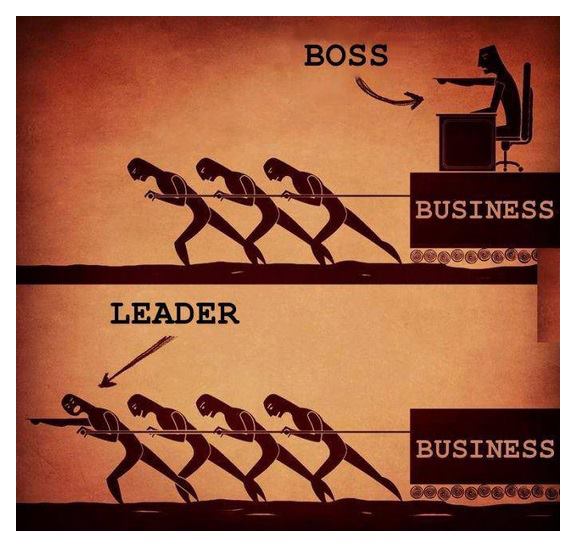
Boss vs LeaderBosses telling us what to do is pervasive, because to some extent it is effective. But it is also problematic. BlessingWhite’s 2011 Employee Engagement Report revealed 69% of people at work worldwide aren’t very engaged with 17% completely disengaged, while Towers Watson’s Health, Wellbeing and Productivity Survey 2012 found 98% of UK employees are impacted by stress. That is an enormous failure to harness more than a fragment of our capability, a colossal waste of potential.

To put it mildly, there’s better ways of working. The good news is that they’re not difficult, even (un)common sense. The difficult part is shifting habits, but the starting point is a desire to enjoy work and a curiosity about learning.
Transitioners are human, and many have experienced the challenges that humans usually experience when they try to get together to get anything done. But at its best Transition takes group health seriously, because it takes the job in hand seriously, albeit lightheartedly. And that means being serious about enjoying the journey, because enjoying what we do is productive.
An aeroplane is on the wrong course 90% of the time. Planes, like bicycles, permaculturists and smart people in smart organisations, use dynamic steering. I don’t mean charming and engaging, but actively responding to a changing environment in order to reach their target, although charming and engaging never go amiss. I find it reassuring that planes get to their destination most of the time, although I’ve personally made a no* flying pact due to Climate Change, so probably less planes flying would be a good thing.
So here’s some simple top tips to transform your work without much effort:
1) Know your destination, celebrate arriving and often.
2) Evaluate briefly at the end of every meeting, and periodically in your team. Appreciate what’s working, ask what could be improved. Correct your course, like steering a bicycle.
3) Take it in turns to speak briefly on a subject, everyone having a chance to say something and be listened to without discussion.
4) Replace blame and complaint with finding ways of enjoying more.

Time is short. Aim high. Have fun. 


By  

Wednesday, August 20, 2014

6 Things Mark Cuban Says You Need to Be Great in Business


There are no shortcuts in business. In order to be successful there are some things that you must know. These are not all of them by a long shot, but in my humble opinion, they are six of the most important:

1. Know how to sell.

Selling means being able to convey why your product or service, which may be you if you are looking for a job,  will make things better. Selling is never about convincing. It is always about helping.

2. Put yourself in the shoes of your customer.

If you know how to put the person you are dealing with in a position to succeed, you can be successful. In order to do this, you must be able to quickly understand the needs and demands of that person and those of the company(s) they work for or with. Every person and industry is different. This is something that comes from investing incredible amounts of time to understand different industries , businesses, roles, and what has made them work and not work.
It is a never-ending process of learning about what companies need. What people in those companies need and how they work. If you don’t understand what it takes to make the people and companies you work with better, you don’t understand how to be successful.

3. Know as much as you can about technology.

The beautiful thing about technology is that it changes every day. Look at any tech you can see today or have ever seen. Any tech you have read about. It was invented by someone. They know the product better than everyone. On the day that it is released, you are as knowledgeable about that  technology as anyone else in the world. From there its just about effort to keep learning.
If you are one of the few people that know the new technologies, you are in a unique position to put yourself in the shoes of your customer(s) and determine if the new technology can be of benefit. New technologies enable change and where there is change there is opportunity.  Its up to you to figure out  what that opportunity is.

4. Always ask how you would design a solution if no current solution existed.

Know this: 99.99 percent of the things we do in business are being done the way they have always been done. No one has re-imagined how things should be done. That is what successful people do. Every situation they are in they take their knowledge of the business or situation they are visiting, whether its buying a deck of playing cards, eating at a restaurant or trying to solve a problem and think about how to re invent it. They don't ask people what they would want. They envision a complete reapplication. Then they decide what to do with what they just recreated.

5. Is it the path of least resistance to something better.

Lots of people come up with ways of doing things that they think are great/amazing. What they fail to ask is whether it will make anyone else’s life better or easier. The simple test of any imagineering of a process or situation is simple. Is this the path of resistance  to a better place for the user? Yes or No.

6. Be nice. 

People hate dealing with people who are jerks. It’s always easier to be nice than to be a jerk. Don’t be a jerk.
Mark Cuban

The ‘Ice Bucket Challenge’ Has Raised More Than $15 Million For A Rare Disease


The so-called “ice bucket challenge” — the Internet sensation that requires people to either dump a bucket of ice water over their head, or donate money to fight ALS, or both — raised $15.6 million for the ALS Association between July 29 and August 18, the nonprofit group announced on Monday. During the same time period last year, the organization raised a much smaller sum of $1.8 million.
“The ALS Association is extremely grateful for the generosity of these donors, and for the actions of several people who initiated and spread this incredible viral effort,” the organization said in a statement on its website.
Everyone from Bill Gates to Oprah Winfrey to LeBron James has posted a video of themselves completing the challenge; even President Obama has been nominated to get in on the action, although he hasn’t yet indicated whether he’ll participate. And celebrities aren’t the only ones. Between June 1 and August 13, people have shared more than 1.2 million “ice bucket” videos on Facebook. The challenge has been mentioned more than 2.2 million times on Twitter since the end of July.
The “ice bucket challenge” didn’t used to be specifically tied to ALS, a rare and fatalneurodegenerative condition that’s commonly known as Lou Gehrig’s Disease. It was initially about either dousing yourself with ice water or donating money to any charity of your choice. But after Chris Kennedy, a golfer in Florida, was nominated to complete the challenge, he decided to raise money for ALS because one of his relatives has it. Soon, ice bucket videos began to circulate among the community of people afflicted with Lou Gehrig’s Disease, posted under the hashtag #StrikeOutALS — and that’s when the campaign really started to take off.
The campaign has inspired thousands of people to give generously to a cause they’ve never supported before. According to the ALS Assocation, 307,598 of the donations it has received in over the past three weeks have come from new donors. But now that so much money has been raised for ALS — a disease that afflicts an estimated 12,000 Americans, according to the CDC, and often kills people within just three years of diagnosis — what exactly will those funds go toward?
“This amount of money… it opens up new opportunities that were previously unfathomable,” Carrie Munk, the spokesperson for the ALS Association, said in a recent interview with Forbes. Because ALS affects relatively few people in the United States, it’s what’s known as an “orphan disease,” which means that developing potential treatments or cures isn’t a high priority for the pharmaceutical industry because they won’t be very profitable. Much of the money will likely go toward that underfunded research, although Munk said the group is still assessing exactly how to best use it.
The challenge isn’t without its controversies. Several critics have argued that the outpouring of support for ALS will dry up philanthropic donations toward other important causes, including medical conditions that impact a greater number of people. Others have argued that the viral nature of the campaign — posting a public video on social media sites — isnarcissistic. After all, you don’t need an ice bucket to decide to donate to charity.

Nonetheless, for better or for worse, this type of “cause marketing” is one of the most popular strategies to boost philanthropy. The most successful cause marketing campaigns are typically driven by big corporations like General Mills, American Express, and Proctor & Gamble. In 2012, the biggest cause marketing drives raised $358 million for charity. Other nonprofits are now considering launching their own versions of the “ice bucket challenge,” but they acknowledge it will probably be hard to replicate.